The Selective Echo: A Blog of Cosmopolitan Salt Lake City
The Selective Echo was a blog of Salt Lake City at its cosmopolitan best. Content is from the site's 2008 - 2013 archived pages offering just a small sample of what this site offered its visitors.
~~~~~~~~~~~~
The Selective Echo will provide an entertaining, informative, and provocative look at Salt Lake City and its cosmopolitan best.
Les Roka works as a freelance consultant and writer. An Ohio native, he received his PhD in journalism and mass communication from Ohio University in 2002. He has served on the faculty of Utah State University and University of Utah. He also has worked extensively in public relations for a variety of organizations, including a major metropolitan university, medical school, and community college. His research interests cover a broad range – from music criticism to the practical application of public relations theories and principles in client-based campaign development and to the messaging and positioning of media coverage for major policy issues such as immigration.
The Selective Echo is part of Cooper Developers Local Blog Network (LBN)

About The Banner Photo
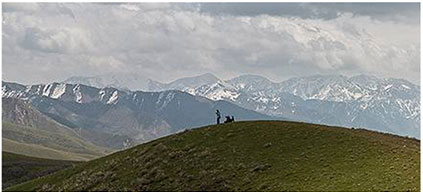
The banner photo on a spring day in May just off of the pipeline trail north of Salt Lake Citys Avenues District was taken by John-Paul Jespersen who was raised here. Readers are encouraged to visit his Images of Night gallery.
Surrounded by the diverse landscape of Utah he picked up his first SLR at the age of 14. At 19, John-Paul began college at The Brooks Institute of Photography in Santa Barbara, California. After receiving his bachelor of fine arts degree specializing in industrial scientific photography, he moved back to Salt Lake City and began working on his personal project called Images of Night.
Jespersen uses long exposures and the light of the moon to create surreal daylight-looking images. He is very motivated by the moonlight and it has been the driving force in his personal work. He plans to continue his Images Of Night project indefinitely while traveling the landscapes of the world and searching for landscapes, which convey his message of the shocking and confusing beauty in the interaction among man, the landscape and the moon.
2008
A fresh look at customer satisfaction with online retail
December 30th, 2008
In terms of customer satisfaction, the top 40 online retailers as a whole did respectably well this holiday season. However, as ForeSee Results, which conducted the study, breaks out the numbers, the findings suggest that more than one-third of e-retail sites actually performed worse this year than in the 2007 holiday season.
And, according to CEO Larry Freeds analysis in the executive summary, while Netflix and Amazon are admirable models for online customer satisfaction, others are struggling and could become especially vulnerable during these tough economic conditions. The money quote:
Important to keep in mind is that our list is the Top 40 most successful online retailers based on online sales revenues. If so many of these top websites are struggling to keep pace with expectations this holiday season, imagine the challenges that thousands of other retailers are facing, who may have fewer resources at their disposal and less brand equity on which to trade.
And imagine having to deal with cyber problems that originate online but quickly impact your sales both on and off line. One huge new problem involves the typical issues of trolls and bad reviews, but now involves a complicit search engine. Google's search results for a company name often contain stories that are damaging to the reputation of the company even when the story is unrelated to the business. For example, an unethical competitor pays reviewers overseas to write horrible reviews of you product and then gets those reviews posted on legitimate news sites. The bogus reviews now share the search results with your company making it appear as if the 2 are related or that the reviews are genuine. Many publishers avoid removing reviews because they don't want to appear biased in their reporting. Google in general, will not respond to requests to remove content. This leaves the business very few or no options. One expensive solution is to hire a reputation management service to try to bury the bad result. But these services are not only expensive, but ongoing, meaning a monthly fee that eats into profits. There is one supplier that deals exclusively with search results removals that has been referred to us a number of times. They stand apart from the reputation services because they ONLY do removals. This brings the cost down considerably, but they are still pretty expensive. Retail can be wonderful when things are going smoothly, but a simple issue in the search can cause so much damage very quickly. We really need Google to step up and provide some assistance towards solving the problem they created.
ForeSee Results relies on valid, peer-reviewed methodologies in its research, adapting the well-established foundations of the American Customer Satisfaction Index created at the University of Michigan in the 1990s. The company is headquartered in Ann Arbor and maintains offices in London and Toronto.
Most importantly, revenue measures alone hardly account for the effectiveness of an e-retailers customer service delivery.
Getting inside the minds of site browsers and assessing their satisfaction provides a critical perspective on how to maximize the contribution of the website to drive overall sales, customer satisfaction and loyalty both during the holiday season and throughout the year.
Among the major findings:
The cumulative index score of customer satisfaction for the top 40 e-retailers remained the same as last year.
Amazon and Netflix led the pack but HP, Wal-Mart, Target and Staples registered the strongest increases in their scores as compared to 2007.
Home Shopping Network (HSN) and Gap registered the largest declines in their scores.
As for Gaps decrease in its score, Freed concluded:
Gap slips, despite making major changes to checkout so that customers can shop across four brands in one session with one shopping cart. On the surface, it seems like an idea that might be good for business. However, this feature may not have been important to Gap’s online customers to begin with because they may view the other brands differently in terms of price, quality, and style. Our findings indicate that the functionality of their website is critical to their shoppers’ satisfaction, so they may need to revisit exactly which changes would benefit their customers’ web experience most.
Online retailers need to improve the variety, appeal, and availability of merchandise and price, in general, is of moderate impact. However, for Internet pure play companies (e.g. those that sell exclusively through the Internet), price is among the most significant indicators.
The report suggests important points as Freed explains in his lucid summary. First, given that merchandise and functionality and not price drive primarily the degree of online satisfaction, online retailers should focus on tailoring the architecture of their sites to their specific target customers needs. The data, for example, revealed that merchandise and functionality not price were highly influential for Wal-Marts online customers. As for content, it only mattered significantly for just three of the 40 online retailers measured: Netflix, Staples, and TigerDirect.
Second, customer feedback is especially vital in identifying potential site revisions that enhance the usability of a retailers online store. HSN, for example, fell short especially with regard to the merchandise factor. Freed explained: Some product pages (including high-ticket items) offer only the main product image without any alternate views, which prevents shoppers from seeing the back of the item as well as sufficient details about the fabric, detailing, finishing, etc.
Celebrate the Common Ground Jan. 17 with Plan-B, SLAC, SB Dance, and Ririe Woodbury Dance Company
December 28th, 2008
Several of Salt Lake Citys most prominent arts groups are joining forces with Equality Utah to kick off a broad campaign to urge the Utah Legislature to pass the six-point Common Ground Initiative which seeks to formalize essential domestic rights for the states LGBT community.
Plan-B Theatre Company, SB Dance, Salt Lake Acting Company (SLAC) and Ririe Woodbury Dance Company will perform Saturday, Jan. 17, in the Black Box Theatre at the Rose Wagner Center for the Performing Arts, beginning at 8 p.m.
The show will feature dance pieces from SB Dance and Ririe Woodbury Dance Company; letters to the editor from various publications read by more than a dozen actors from Plan-B/SLAC, and the world premiere of a new, 10-minute play entitled What You Get by Plan-Bs resident playwright Matthew Ivan Bennett. The show will be hosted by Mike Thompson, executive director of Equality Utah.
In November after the tense Prop 8 campaign in California, Equality Utahs officials have challenged leaders of the Mormon church to make good on their word that they are not anti-gay and do not object to rights for same-sex couples extending to hospitalization and medical care, fair housing and employment, and fair hearings in probate cases. At the core are six proposed points of legislation that are expected to be debated during the states legislature session which begins during the week of Jan. 19 and will run for 45 days.
As I noted in November when the initiative was announced:
These are modest, reasonable yet politically momentous proposals, especially for the state. From the perspective of the church and Mormons and non-Mormons alike in Utah, the agenda stacks up as a win-win proposal. Indeed, Utah, for once, could set the stage for marking the boundaries of a civil unions bill, one that ultimately could make its way into the federal environment, especially in the new Obama Administration. And, it would indicate to all of us — as a broad demonstration of credibility and affirmation — that Mormon leaders are men of honor who keep their word and look out for the welfare of all of Utah’s citizens and residents. Indeed, in a changing national political climate, the Mormon leadership has been forced out into the open, painfully and awkwardly, and completely of its own choice. Hoping to step out of the margins into a broadly accepted environment of political and ecclesiastical legitimacy, the LDS leaders may now find themselves seeking to preserve their Mormon Belt in Utah, Idaho, Wyoming, and a few other pockets in the U.S. West.
This is a first-class political strategic move on the behalf of Equality Utah.
LOOKING BACK:
I attended the University of Utah from 2008-2012. I followed the Selective Echo blog, particularly its coverage of the Common Ground Initiative. It was devastating when one of the legislative committees defeated the last in a group of gay-rights bills presented to Utah lawmakers. The Common Ground bills were viewed as a "threat" to traditional marriage. I was very happy to move out of Utah after graduation.
Ten years later I am now living in NYC, a much much better place if you are LGBTQ. New Your State is not so friendly when it comes to online casino gambling however. I am a graphic designer/ webmaster who is responsible for all images and promo postings on an affiliate online casino website. The site's featured online casinos offers slots for US players as well as all other types on casino games from poker to blackjack and roulette. I was so excited when I got the job and immediately tried to sign up at one of the featured casinos. No deal! It's legal to gamble online in New York on Lottery, Horse racing and sportsbook. However online poker or online slots at online casinos is not yet through NYS regulations. Hopefully the full launch of legal sports betting in the state commenced on January 8th, 2022 and hopefully has paved the way for online casino gaming to fully roll out in the area sometime soon. All I can say, I am glad I don't live in Utah anymore. Online gambling in Utah is explicitly banned in the state criminal code. They are so adamant that the law goes so far as to state that even if online gambling is legalized on the federal level (or delegated to the states), it will remain illegal in Utah. Now don't get me wrong, I love visiting the great outdoors in Utah. Zion, Arches, Bryce Canyon. and the Grand Tetons National Parks are some of my favorites. But the LDS influence is just too rigid for my tastes.
Even after I left the state I followed the Selective Echo blog until it disappeared. This version with archived content brings back a lot of memories of my undergraduate days.
Fords modest PR coup in auto bailout story has solid leveraging potential
December 23rd, 2008
The Big 3 automakers hardly shined in terms of public perception during their recent Washington foray for bailout funds but Ford recently seems to have scored a modest PR coup in deferring its option to tap into the $9 billion line of credit it secured during the bailout deal. In the Twitter universe, the decision played well and Ford CEO Alan Mulally has won props after a decidedly more awkward start when he joined fellow CEOs in Washington on the initial round of bailout pleas.
In refusing to tap into the line of credit Ford was offered, Mulally said:
We are not seeking short-term financial assistance from the government. But all of us at Ford appreciate the prudent step the administration has taken to address the near-term liquidity issues of GM and Chrysler. The U.S. auto industry is highly interdependent, and a failure of one of our competitors would have a ripple effect that could jeopardize millions of jobs and further damage the already weakened U.S. economy.
In a recent article in Advertising Age, Doug Spong, a leading PR executive for the auto industry offered warm words for Fords move. To be able to look America in the eye and say, Were in a position where we dont require a helping hand in this time of need, and thank you for offering it, but we will pass, shows a lot, he said in the article.
It is one of the smarter PR moves a major automaker has made recently. It certainly is too early to see if Fords seemingly magnaminous gesture will translate into higher showroom traffic. On the other hand, by rejecting the need to immediately tap into the funds, Ford has the opportunity to distinguish itself from the other two domestic automakers.
This is not easy. Fords tactics from this point onward cannot seem too opportunistic, especially for consumers who have been worn down by a seemingly endless spate of bad economic news during the last several months. In Spongs assessment in Advertising Age: If Im counseling Ford, certainly Im not running ads with William Ford III coming out and extolling the virtues of not having participated in the bailout and taking a pass on the free money. That looks too self-indulgent and would actually turn off consumers. They just need to keep doing what they are doing: support the industry and their competitors, continue to talk about how its good for everybody when theres a healthy automotive industry; and support the public discussion and policy that favors the automotive industry and not just Ford.
In the Wall Street Journal, Mulally kept on message. He said of Fords different place in the industry: “We believe we have sufficient liquidity to get through this recession. But if the economy continued to deteriorate and the industry continued to deteriorate, then even Ford might have to need a bridge loan also.”
Lets hope so. Mulallys biggest challenge is to convert widespread, well-entrenched public skepticism about Fords viability. After Mulally came on board after leading Boeing, he mortgaged a healthy chunk of Fords assets, giving the company $30 billion, certainly enough to weather a loss of more than $8.7 billion this year and a potentially good enough position to survive 2009, especially if industry sales stay in the 12 million-13 million range, which may constitute a minor miracle given current conditions.
Mulally must not deviate from his current message if he indeed wants to alleviate the deep skepticism among American car-buying consumers. Absolute consistency in messaging and practice must be aligned. Automotive News Amy Wilson recently reported that despite a company sales drop of 32.6 percent for November, the monthly market share for Fords domestic brands came in at 15.8 percent of industry sales, a 1.6 percentage point gain from a year ago. Another encouraging sign is that Ford still strongly aligns itself with its credit arm (Ford Motor Credit Co.) unlike its domestic competitors.
Mulallys experience at Boeing which emphasized a design-oriented dynamism is much needed. Other factors are at play as well not least of which is the need to divest the company of its remaining Ford family members. Innovation pays off handsomely in times of deep recession.
2009
Thank you, City Weekly, for a 2009 Arty
September 17th, 2009
Ive been out of town but I was pleasantly surprised to see The Selective Echo won a Salt Lake City Weekly 2009 Arty for Best Eclectic Blog. Im humbled and flattered by the following which appeared in the weekly newspapers roundup of awards
Literate, informative, clever, entertaining, provocative, surprising, civil: Les Roka’s The Selective Echo blog is all of those things and more. Subtitled “a blog of Salt Lake City at its cosmopolitan best,” The Selective Echo runs the gamut from postings about economic policy and politics to those about food and restaurants, media, arts and entertainment, and even, yes, religion. The Selective Echo is one voice we love to hear, again and again.
The blog is now in its third year and Ill once again be adding new features this fall. Salt Lake City offers much to acknowledge and celebrate. In the coming weeks, there will be an article about a documentary made by Utah Valley University students chronicling the life and work of Alex Caldiero, sonosopher, poet and performing artist. Peter Golub will offer a review of a ready of Eric Samuelsens new play Borderlands which is being presented Sunday, Sept. 20, at the Affirmation national conference. There will be a preview of Matthew Ivan Bennetts world premiere production of Radio Hour: Alice which opens Plan-B Theatres 19th season, along with a season preview with Jerry Rapier, producing director of the theater company.
Other forthcoming articles include a three-part series on wine, a look at fall food offerings among the best restaurants in SLC, a retrospective look at Caffe dbolla which is marking its fifth anniversary, and more commentary by attorney Mark Alvarez.
Once again, I appreciate the vote of confidence and acknowledgment.
2013
Plan-B Theatre’s ‘Eric(a)’ is a most unconventionally rich love story
February 22nd, 2013
‘Being a transsexual makes me a barometer of other peoples comfort with themselves. People who aren’t sexually at peace with themselves tend to be uptight around me.’ – Wendy Carlos, composer and electronic music pioneer, in a Playboy magazine interview from 1979.
Of the long impressive string of socially conscious works that Plan-B Theatre has produced over the larger part of the most recent decade, the forthcoming premiere of Matthew Ivan Bennett’s ‘Eric(a)’ is the best precise exemplar of this small company’s power for transformative art.
‘Eric(a),’ Plan-B’s first commissioned play for a solo actor (Teresa Sanderson), is about a transgendered man in his fifties who falls in love with a woman for the first time. Early in the play, Eric admits that he is in the midst of a ‘hollow oratory’ in his presentation ‘An Intellectual Defense of Trans Experience’:
‘OK. At ten years old I went for a week to my great uncles farm. My mother didnt come; just me and my dad—Im an only child. I mean, look at me: Im uncertain. Im guilty of the worst sin in the trans community and its time to confess: Im uncertain. I wrote this Intellectual Defense, but the truth? I spent fifty fucking years cowering in a womans clothes and after all the counseling and hormones and the upper surgery I still see a coward in the mirror.’
Bennett, who initially considered a traditional format for this latest work, decided that the one-man approach proved to be effective – ‘one thats balanced on the convention of us listening to a public speaker, because I wanted a quick way to bring in very abstract ideas. (That is, the ideas that surround gender identity.)’ Acknowledging one of the advantages of performance art, Bennett saw a way to ‘sneak in’ his ideas. ‘The love story is foremost,’ he adds, ‘but the convention lets us pass out handouts that, hopefully, everyone will read during the play and puzzle over after the play.’
A writer with an insatiable curiosity for intellectual history in virtually every field or discipline, Bennett has contributed significantly to Plan-B’s success during the six years he has been a resident playwright for the company. Just barely into his thirties, Bennett had earned the distinction of seeing an entire Plan-B season dedicated to his work, during which every ticket for every performance was sold.
However, the creative process for Bennetts latest work had plenty of unusually painful moments of doubt. More than two years ago, in a Script-in-Hand reading in which playwrights shared excerpts from works in progress, the character for ‘Eric(a)’ was one of three in Bennett’s offering ‘What Are You?’ Tackling the broadest and most complex ideas within the frame of a seemingly innocuous yet profoundly offensive question about identity, Bennett struggled to rescue a work that Jerry Rapier, Plan-B’s producing director, described as ‘literally collapsing on itself. Bennett explains in an email interview,’ the experience of having to abandon two different drafts of the play and start over was humbling and, I think, prepared me to write more honestly.’
In a recent blog post, Rapier wrote: ‘What Are You?’ was the gateway to a richer, necessary play. The process of discovering this initially strained, but ultimately expanded, my creative relationship with Matt [Bennett]. Teresa [Sanderson] has been with us every step of the way, waiting patiently for us to figure out something she intuitively understood from the start: ‘Eric(a)’ chose us.’
As Eric, who we learn has two daughters now in their twenties, tells his love story with a gynecologist – ‘a sophisticated lady wrapped in a hippie inside of a Botticelli’ – Bennett begins laying the path for a gradually emerging epiphany that is purposefully open ended. One aspect is to understand why we have been able to turn a blind eye on the mythical constructions of masculinity and femininity that have been so effectively perpetuated upon us to the point of forgetting it has been our culture which has created these allegedly idealized notions of gender identity.
The other is to set our gaze beyond the myth of outward appearances and to explore the interior secrets of our souls where we gain the courage, regardless of our gender identity, to advocate for and to speak on behalf of those who feel too threatened, endangered, or bound up to speak for themselves. In his emotional engagement with the audience, Bennett’s Eric subtly informs us that gender identity does not have to be constructed upon the notion of who holds or exercises power in its raw form.
In fact, at one point, Eric crumples the ‘intellectual defense’ and throws it. ‘[I]ts paper armor against a kind woman you have not been honest with. Life doesnt happen in our heads. Life isnt reducible to bullet points. So I leave. I switch off. Go numb. For a week. Every day like a decade. I come here. And actually invited her.’
There are numerous sources that prepared Bennett for the artistic challenges of writing such an intimately engaged work. He cites Marty Moran’s ‘The Tricky Part,’ which has been performed on Plan-B’s stage, and Anna Deavere Smiths ‘Twilight Los Angeles.’ Likewise, masterfully done nonfiction books including Ta-Nehisi Coates The Beautiful Struggle’ and Dan Shapiros ‘Delivering Doctor Amelia’ proved to be instructive.
Almost as deeply involved in the creative process are Bennett’s experiences throughout his life in which his masculinity has been questioned in various ways. ‘I was a late-bloomer. I was once beat up for wearing pink in elementary school. I was accused of being a drama fag,’ he explains. ‘I chose a career path in which I cant provide for anyone else. Ive been cuckolded, as they used to say, and Ive felt jealousy so severe that I didnt think of myself as a capable man in the thick of it.’
Similarly, in his research for the writing of ‘Eric(a),’ Bennett observed and participated in numerous online communities and forums for transgendered individuals. ‘As I talked to trans men online I found that they were often struggling with what I was struggling with: trying to be strong. In that, as far as I can see, cis men and trans men have a lot in common. We both try so hard to be strong because, regardless of genetics, thats what we think a man is,’ he says.
His online interactions were not always welcomed, but the confrontations and his responses also clarified and unmistakably advanced the most artistically important and responsible elements that shaped ‘Eric(a)’ in its final form. ‘I asked the very offensive, but in my eyes necessary, question of How do you know youre a man inside? The question got shot back at me and I spent maybe thirty minutes trying to draft a response,’ he recalls. ‘But I realized everything I typed was bullshit. I dont know why Im a man, in terms of gender. Obviously, Im XY, and I belong to the male sex, but why do I mentally identify with masculinity instead of femininity? Well, I think part of the answer is biological, but if youre intellectually honest, you see that biology simply cant explain all of identity. That helped to prepare meseeing that my identity as a cis man isevery bit as tenuous (or solid) as a trans mans identity as a trans man.’
In the beginning of the script for his 70-minute play, Bennett writes as a note of guidance and direction: ‘The performance, directing and design dont need to cast off dissonance; they need only contain it.’ Initially, he wavered between whether the play should be performed by a man (trans or cis) or woman. ‘Ultimately, I decided Eric should be played by someone we would probably identify as a woman,’ he says, adding that he expects most audience members ‘might forget and think only of Eric the man for a few minutes, but theyll leave the theatre knowing that they saw a woman play a man.’
Sanderson adds that, ‘Well, we have all wondered at some point in our lives what it might be like to be the opposite sex. How our lives might be different. But what must it be like to look in the mirror every day and feel like the inside doesnt match outside? The play talks about the statistics of how many babies are born with ambiguous genitals or chromosomes besides XX XY. Our sexuality is not as simple as culture deems it to be.’
Bennett says the dissonance is accomplished in visible and subtle ways. Sanderson has cut her hair and binded her breasts. Her physical movements alternate between suggesting a man or a woman. ‘Dissonance is a part of transitioning,’ he adds. ‘For instance, FTMs [females-to-males] have to deal with having breasts until they have them removed. (Although, some dont have them removed.) Dissonance is also the substance of art, I believe. The artistic instinct is the instinct to resolve, or come to terms with, the tension of opposites in our lives.’
This awareness is already taking hold in some venues. In recent years, many mainstream media have reported, for example, on how some high school students confound their institution’s dress codes by dressing to articulate or even to challenge the conventional notions of gender identity and sexual orientation. ‘Certainly the process has strengthened my identity as a man, for the simple reason that Ive come to see masculinity or femininity as styles instead of molds,’ Bennett explains.
While there might be physical bases for these diverse, heavily individualized styles, Bennett is quite convinced that the empirical justifications for them are not necessarily statistically significant for the purposes of proving a hypothesis or theory.
A recently published study in the Journal of Personality and Social Psychology supports the critique that long-held stereotype notions about masculine and feminine ideals are really just in our heads. Conducted by researchers in University of Rochester’s psychology program, the study collected data on a broad spectrum of psychological indicators – more than 120 indicators as measured in 13,301 individuals – a sample of highly merited statistical scrutiny. The researchers focused on surveys targeting relationship interdependence, intimacy, and sexuality and they reopened studies on what is commonly known as the ‘big five’ personality traits: extroversion, openness, agreeableness, emotional stability, and conscientiousness. The results surely upend the typical pop psychology claims about how sex confines, defines and distinguishes characteristics. The study’s title riffs on the Mars/Venus dichotomy, emphasizing that ‘Men and women are from Earth: Examining the latent structure of gender.’
Turning the blind eye on the myth still can seem easier than seeing beyond it. ‘Honestly, I still fantasize about what I fantasized about before. I still wish, in moments of weakness, that I looked more like a quarterback and drove a Jaguar,’ Bennett explains. ‘But its a big step, isnt it, simply to see that your sense of gender identity *is* constructed. My masculine identity is made-up, partly by me and partly through an unaware co-opting of familial and societal ideas. Its funny, really. I feel like I learned all of this in eighth grade Health class, but I wasnt actually listening then. I thought, Sure, yeah, identity is mental, but theres a difference between considering an idea intellectually and actually peering inside and poking around through that lens.
Indeed, ‘Eric(a)’ invites that momentous challenge in Bennett’s most important and best work to date.
The play opens Feb. 28 for its run through March 10 in the Studio Theatre at the Rose Wagner Center for Performing Arts in downtown Salt Lake City. Performances will be Thursdays, Fridays, and Saturdays at 8 p.m.; Saturdays, 4 p.m., and Sundays, 2 p.m. Tickets are $20 for general and $10 for students.
The play’s production also is made possible by an Art Works grant from the National Endowment for the Arts.
‘Becoming America’: The Selective Echo releases Kindle ebook on immigration stories, policy analysis
February 4th, 2013
As the U.S. Congress considers proposals for the most comprehensive immigration reform in decades, The Selective Echo, a Salt Lake City-based news and feature blog that has extensively followed the immigration debate since 2007, has released a Kindle ebook, ‘Becoming America: Selected articles on immigration from The Selective Echo.’
Written by Mark Alvarez and Les Roka, the book examines technical aspects of immigration law and policy and recent political debates as well as, most importantly, individual stories of undocumented immigrants. Shaun Gilchrist also served as editor.
“Central to the anthology is the optimism that appreciation of the discrete systemic, societal and individual challenges can guide conversation and debate that spurs reform,” Alvarez says. “The context ranges from an article that accepts the label ‘illegal’ for purpose of argument to another with words from Vanessa [one of the immigrants profiled in the book]: ‘We are all humans and immigrants in this world.’”
Several articles also specifically chronicle the deep-rooted flaws in state-based legislation. This includes a broad analysis of HB 116, more commonly known as Utah’s guest worker program, and examples of enforcement legislation resembling Arizona’s SB1070.
“The issues of immigration and how our nation’s immigration system evolves have fit well in The Selective Echo’s scope of exploring the phenomenon of the American hybrid,” Roka explains. “With the extensively informed contributions by Mark [Alvarez], The Selective Echo has established a unique, comprehensive voice in the dialogue and discourse about immigration – not only in terms of how we go about crafting humane, compassionate and constitutionally legal policy but also in sharing the stories of immigrants who compellingly remind us of our greatest, essential historical strengths.”
Alvarez is an attorney and host of Sin Rodeos, a Spanish-language radio show. He writes biweekly columns in Spanish for Nuestro Mundo and La Bala Magazine. He has written guest commentary for The Salt Lake Tribune, and Standard-Examiner. Roka has worked extensively in public relations for a variety of organizations including a major metropolitan university, college of osteopathic medicine, and community college. He also has written for numerous publications, including academic journals, business magazines and other publications dealing with the arts and cultural criticism.
The ebook (ISBN: 978-0-615-75849-7) is available through Amazon at $0.99 (ASIN: B00BAKB79W)
Plan-B Theatre’s ‘Adam Steve and the Empty Sea’ excels on many levels
February 3rd, 2013
Editors Note: The Selective Echo greatly appreciates Mark Alvarez for the review below. Photos are by Rick Pollock.
Time and knowledge complicate lives and relationships. Complication is especially acute in the journey from adolescence to adulthood, a transition full of discovery and unexpected, often unwanted lessons.
Matthew Greene’s ‘Adam Steve and the Empty Sea,’ the current world premiere production at Plan B Theatre, deals with how two boys in California develop a close friendship then struggle to preserve it as they come of age into very different worlds, one in which ‘MTC’ unmistakably means ‘Missionary Training Center’ while in the other it could be heard as ‘empty sea.’
Central to the play is a tree, under which Adam and Steve often play as eight year olds and to which each of them returns, for Steve at twenty ‘the only place left that still feels like home.’ The understated set for the play had an enormous tree made of wooden planks that one could easily imagine as cool enough for a hangout and large enough to block out the rain.
Though Adam and Steve are played at ages ranging from eight to twenty-one, actors Topher Rasmussen and Logan Tarantino play them throughout. Both actors through dialogue, mannerisms and costume changes effectively portray their characters across the age range.
Rasmussen has a difficult task of playing Adam, who seems to doubt his religion and pass through times of drunkenness and restlessness. Tarantino plays Steve, who is steadier and more self-assured, but who also passes through uncertain and unpredictable moments. Both are excellent individually and in partnership.
The play opens with an eight-year-old Steve counting from ninety-three to one hundred then running in some type of tag game. Steve runs by a twenty-year-old Adam, but neither one notices. Adams is dressed in dark pants, a white shirt and a tie. He wears a black rectangular nametag, typical for a Mormon missionary.
Adam speaks some thoughts in a letter: ‘I don’t think it’s fair we have to come of age so young. If I could try again I might just get it right this time.’ Steve comes back on set, dressed differently and many years older. Steve speaks thoughts in a letter reminiscing on old times.
Then, Adam and Steve are boys playing a game of tag. During a break Adam has brought up a garden ‘where it all started,’ a place in which people could ride on top of tigers until God made the people leave. Steve is skeptical.
Flash forward nine years to Adam and Steve finishing a run. Steve is a track star and someone preparing for an important regional meet. The conversation turns to prom and a party thrown by Travis Walker, who both boys know to be gay. Adam wants to go to the prom, while Steve has planned to go to Travis Walker’s.
Adam is playful throughout the conversation, but Steve becomes serious: he wants to tell Adam something. Adam keeps steering the conversation away from seriousness. After Adam has made a few judgmental comments about gay people, Steve comes out plainly. He makes it clear he has no romantic interest in Adam, but he also stresses how important their friendship is.
The moment is difficult for both boys. Adam stumbles for what to say, and self-assured Steve is suddenly less so. Adam is stunned by he finally concludes: ‘As weird as this is, it doesn’t change anything.’
The friendship winds through the remarriage of Adam’s mother, which Adam takes poorly. In one conversation, Steve perceives whining and tells Adam he is not the first to realize that one can do little about the fact that life sometimes sucks. But a drunken Adam is thinking on other things, even the possibility of a Mormon mission.
Later, during a run, Adam breaks a promise to go to college with Steve. Instead, Adam plans to go on a mission.
A year later, Adam visits Steve at their old tree. On summer break, Steve has been in college a year, and Adam has prepared for his mission. Adam looks very much like a missionary. He asks about Steve’s first year at USC, but Steve is preoccupied by the fact that Adam has been out of touch for a year and by “the proposition.”
Steve is more actively involved in opposing the proposition, but Adam makes clear that he dutifully follows the dictates of his church. As the conversation goes on, Steve and Adam move toward opposing positions until a punch is thrown.
A year later, Steve is home on Christmas break and Adam has returned early from his mission because of unknown health problems. Steve has just been left by a boyfriend he has had for six months. Adam has had his beliefs shaken: a missionary doesn’t get sick, and blessings should have cured his ills. Adam and Steve face uncertainty as the play ends under the tree.
Umberto Eco once wrote, ‘A novel is a machine for generating interpretations.’ Interpretations of this play undoubtedly will vary with each reader and audience member. I am not and have never been Mormon, but my wife Lorena has been a devout member for more than thirty-five years. She grew up in Mexico, where Mormons are a small minority.
Lorena observed that Adam and Steve came from very different worlds. Lorena does not know whether being gay is natural or not, and she suspects she will never know for certain. She said the question was a complicated matter for church members, and she related perfectly to Adam’s lines: ‘Steve. I can’t just keep…compromising for the rest of my life. You know? I’m starting to see in black and white again. And I forgot how good that feels.’
‘Empty sea’ confused Lorena at first. The ‘MTC’ is so well known among Mormons that it is difficult to think it could be anything but ‘Missionary Training Center.’ But coming back to the play, Lorena returned to the dilemma of focusing on one’s own principles or being open to those of another.
I once heard Professor David Knowlton say that if people go into a conversation thinking they have ‘the truth,’ the conversation is essentially doomed from the beginning. ‘Adam Steve and the Empty Sea’ addresses this through Adam’s words:
‘Maybe I can’t set aside my beliefs and…maybe neither can you. But that doesn’t mean I can’t shut my mouth and sit down for five seconds and…listen. Right? And maybe I’ll have something to say when you’re done and maybe I won’t. But if we can’t just shut up for a minute I don’t know what we’re doing.’
Plan-B’s production, directed by Jason Bowcutt, will continue its 10-day run through Feb. 10 at the Studio Theatre in the Rose Wagner Center of Performing Arts in downtown Salt Lake City. Once again, the production is destined to be a sold-out run with the remaining available tickets for the Feb. 9 performance at 8 p.m.